Chronic Total Occlusion Intervention
Chronic Total Occlusion Intervention
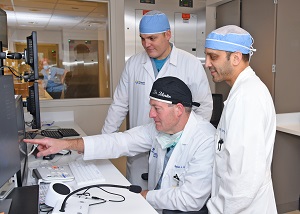
Why Choose TriHealth?
- TriHealth Heart & Vascular Institute offers patients diagnosed with a Chronic Total Occlusion (CTO) minimally invasive and cutting-edge techniques to restore normal blood flow.
- Our team of regionally renowned physicians are experts in the treatment of CTO and complex coronary artery disease
- Referrals come to our trusted CTO specialists from around the region.
- High volume center with low complication rates and high success rates.
Chronic Total Occlusion (CTO)
Chronic total occlusion (CTO) is the buildup of plaque in a heart artery that has caused a complete blockage of the artery. Unlike a heart attack, CTO is a slow-forming blockage that has completely obstructed blood flow for at least 90 days. During that time, the heart has built alternate pathways to reroute blood around the blockage. However, these alternate pathways or “collateral vessels” often are not sufficient to provide normal blood flow, leaving patients with symptoms that interrupt their daily lives.
CTO Symptoms
- Chest pain (angina)
- Shortness of breath
- Tiredness
- Nausea
- Dizziness
CTO Risk Factors
- Pre-existing coronary artery disease (CAD)
- Family history of heart disease
- High cholesterol
- Smoking
- High blood pressure
- Diabetes
- Obesity
Diagnosing CTO
TriHealth Heart & Vascular Institute’s team of expert cardiologists utilize a wide array of testing to evaluate symptoms. After a thorough physical evaluation and medical history, the cardiologist may recommend tests including some of the following:
- Electrocardiogram (EKG)
- Nuclear stress Test
- Echocardiogram
- Coronary computed tomography (CT) scan
- Cardiac magnetic resonance imaging (MRI)
- Heart catheterization and coronary angiogram
The patient and cardiologist will work together to decide on the most appropriate tests. Heart catheterization and coronary angiogram, procedures where contrast dye is injected into the arteries around the heart, can provide the physician with valuable information about the heart’s anatomy and function. They also can help the patient and physician discuss and determine the best treatment options.
CTO Treatment
Historically, the only treatment for a CTO was open heart surgery frequently called coronary artery bypass grafting (CABG). CABG is an extensive procedure with a long recovery time and is not always an option for every patient. Recent advances in medication therapies and minimally invasive procedures such as percutaneous coronary artery interventions (PCI) have provided patients more options for life-changing treatment.
The first line treatment for a CTO is medication. You and your cardiologist will work together to develop a medication regimen that can reduce or eliminate your symptoms while helping your heart improve collateral blood flow to the blocked artery, getting you back to doing the things you enjoy most. If medication alone is not sufficient, your cardiologist may refer you to a TriHealth Heart & Vascular Institute interventional cardiologist who specializes in CTO PCI.
CTO PCI
Our interventional cardiologists who specialize in opening completely blocked arteries use several different cutting edge minimally invasive techniques that only a handful of cardiac centers in the country are capable of performing, with a success rate of approximately 90%.
During the CTO PCI procedure, our team of physicians and specially trained staff use small tubes (called catheters) and wires inserted through the arm and leg to penetrate the blockage. Our physicians specialize in up-to-date techniques to break through the blockage from the front and back of the blockage and even through the wall of the artery itself. Once successfully through the blockage, angioplasty (widening of the artery, often with a balloon) is performed and stents (small mesh tubes) may be placed in the artery to restore normal blood flow to the blocked arteries, relieving symptoms of CTO.
What to Expect CTO PCI
- Once you have had your clinic visit with one of our CTO PCI specialists and are scheduled for your procedure, please review your pre-procedural paperwork carefully. This paperwork has very important information regarding your arrival time, what medications you should and should not take on the day of procedure, and how to contact us if you have questions about your upcoming procedure.
- TriHealth Heart & Vascular Institute is committed to providing you with world renowned care safely and effectively. There are some risks with CTO PCI, which can include bleeding and infection at the catheter insertion site in the wrist and leg, kidney damage from the contrast dye, micro-tear in the heart artery, and heart attack.
- After your procedure, it may be necessary for you to stay overnight in the hospital.
- It is important to discuss any concerns and questions with your physician during your clinic visit. We are happy to answer any questions you and your loved ones have about your procedure.
Meet Your CTO team
TriHealth Heart & Vascular Institute’s dedicated team of CTO specialists are leading experts in the treatment of CTO and complex higher risk interventional procedures. They offer patients options in even the most complicated cases. Physicians at other institutions across the Tristate area frequently refer to our group and our team is willing to take time to give you a second opinion.
Questions?
Contact Jamie with any questions you may have about the CTO program.