The Doctor is Always In
Carol Begley arrived at the emergency room at Mccullough-Hyde Memorial Hospital with severe breathing problems. Without a local pulmonologist there that day, the medical staff could not pinpoint the exact cause. However, the recent affiliation with TriHealth allowed Mccullough-Hyde access to some of the best specialists around, and one of them, CraigEisentrout, M.D., had the answer. The only problem was that he was 50 miles away. To Begley’s surprise, this specialist arrived at her bedside virtually the very next morning. “Virtually” is the right word, because the doctor remained in Cincinnati at anotherTriHealth hospital, Bethesda north, while Begley remained in Oxford.
“We’re using technology that’s almost like Facetime or Skype,but with specialized medical tools that provide much more information,”says Dr. Eisentrout, a specialist in pulmonary medicinewith a subspecialty in critical care. He uses the “telemedicine”equipment that TriHealth recently invested in to bring patientslike Begley, 65, real-time consultations, despite his distance fromthem.
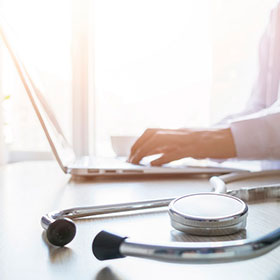
During a telemedicine exam, the physician is at one locationwith a video camera, monitor and microphone so that thepatient, family, nurses and therapists at the patient’s bedsidecan see and hear that physician. A similar setup is in the patient’sroom, so Dr. Eisentrout can see and hear the peoplethere. At his direction, nurses at the bedside use special handheldcameras to zoom in on the patient’s eyes or other areasof the body. A remote stethoscope transmits information aboutthe heart rate and lungs.
“The whole exam was amazing,” Begley says. “I was able tosee the doctor, and he could see me. I was in awe.”
“Being able to see and hear each other offers important advantagesover reviewing medical records alone,” Dr. Eisentroutsays. “Patients can see that I’m engaged, and I can see the patient’sreactions. During the consultation, we almost forget that we’re50 miles apart.”
Telemedicine has been in use for about 40 years nationally, butvideo and internet technology has advanced to make it now a veryeffective and efficient way to deliver care here. Besides providingimmediate access to specialists, research shows that this technologycan save time and money, encourage patients to adhere totreatment, and improve patient satisfaction. One study found telemedicinesaved patients from having to travel an average of 400miles over the course of their care. Without it, Begley might havebeen transferred to another hospital, and away from her husband,grandchildren and friends.
Begley left the hospital with medicine the day after treatment.“Because Dr. Eisentrout was able to examine me this way soquickly, it put an end to the guessing and worrying,” she says.“This will be an asset to everyone in the community, and I thinkit’s wonderful.”