4 Reasons to Add Strawberries to Your Diet
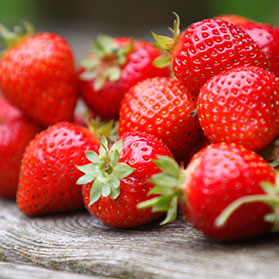
This time of year, berries are ripe for the picking – whether at a local farm or in your own backyard.
#1. When You Eat One, You’re Eating Nearly 200 Separate Fruits
Strawberries are the only fruit with seeds on the outside, a distinction that means they are not classified by botanists as true berries, which house their seeds on the inside. Indeed, the seeds – the average strawberry sports 200 – are actually considered a separate fruit.
#2. Ladies, They Can Lower Your Risk for Heart Attack
A study conducted by Harvard reported that women ages 25 to 42 who regularly consume strawberries and blueberries are at lower risk for a heart attack. The reason: the fruits’ high concentration of anthocyanin, a flavonoid that may help lower blood pressure and improve blood-vessel function.
#3. They May Lower LDL or “Bad” Cholesterol
Strawberries also may help in lowering bad LDL cholesterol and C-reactive protein (a blood marker that may indicate inflammation).
#4. They’re Loaded with Antioxidants
They’re also known to contain powerful antioxidants, and they’re a significant source of fiber and vitamin C. Because vitamin C-rich foods assists in the body’s absorption of iron, pair strawberries with iron-rich foods such as spinach or dried fruit.
- Related: Recipe: Hawaiian Aloha Kabobs
Buy, Store, Grow
Strawberry-picking season in southwestern Ohio lasts roughly from mid-May to late June. And you can always bypass eh grocery stores and pick your own at one of our area’s farms (find one at pickyourown.org).
If you like the harvesting experience, you might want to try planting your own strawberry patch next season. Strawberries grow best when planted 18 to 30 inches apart, in sandy soil with excellent drainage and full sun. Plant in the spring (as early as the soil will allow), in an area that will warm quickly should there be late-season frost.
Strawberry plants will sprout lots of runners that will form new plants if left unchecked. Cut these runners, and you’ll have a higher berry yield. Strawberries spoil quickly – pick them the day they ripen and use within three days. Refrigerate them, either in a single layer in a dish lined with paper towels or in a colander, and hold off on washing them until you are ready to use them.
There are two principal methods:
- Put them into a colander and rinse with cold water.
- Wash each one gently with a damp cloth or paper towel. You should cut away the leaves and the portion surrounding them, because that area can be a hassle to clean – but do so after washing because this can change the texture and flavor.
Finally, whenever possible, dietitians recommend choosing certified-organic strawberries. That’s because of pesticides – the Environmental Working Group has ranked strawberries No. 4 on its “Dirty Dozen” list of fruits and vegetables with the largest amounts of pesticide residue.
Try It!
Easy Strawberry Jam Recipe
Courtesy of Whole Foods Market
Ingredients:
- 1 lb. organic strawberries, hulled
- 6 Tbs. sugar
- Optional flavorings: 2 slices lemon, seeds removed, or 1 sprig fresh rosemary
Preparation:
- Place the strawberries in a food processor, and pulse until just coarsely chopped, or chop them roughly with a knife.
- Place in a medium saucepan, and add the sugar and flavoring you’d like.
- Cover and cook over medium heat, stirring occasionally, until the sugar melts and the berries soften and release some of their liquid, 4 to 5 minutes.
- Uncover, lower heat and simmer until the berries begin to fall apart and the mixture is thickened and no longer watery, 12 to 15 minutes.
- Ladle into a glass jar, eat warm or cool to room temperature.
- Cover and refrigerate up to two weeks.